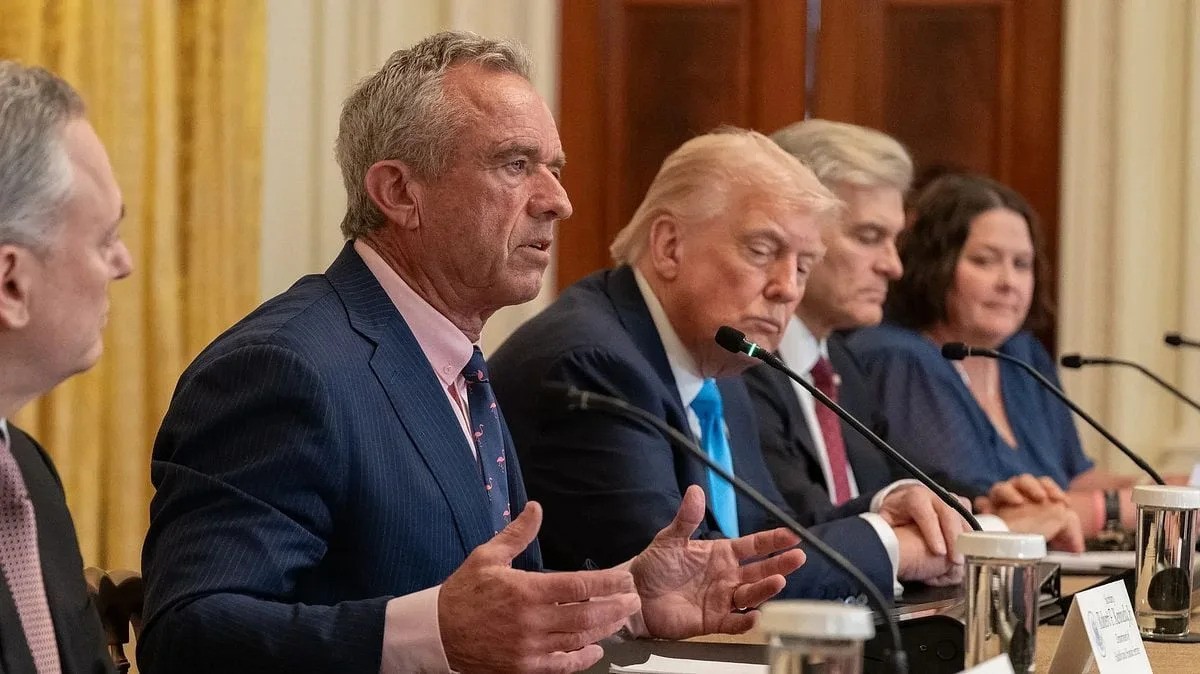
The Trump administration has frozen more than $1 billion in Medicaid payments to California and Minnesota, citing widespread fraud and a breach of the social contract that underpins American federalism. U.S. Health and Human Services Secretary Robert F. Kennedy Jr. announced the pause on Tuesday, stating that both states must provide documentary proof of legitimate payments to recover the funds.
Why Did Washington Freeze These Funds?
Kennedy said California and Minnesota violated the social contract that makes the country strong and its democracy function. The administration used artificial intelligence, advanced analytics, and traditional financial verification to uncover fraud in both states. In California, over $867 million was frozen, while Minnesota faced a freeze of more than $200 million.
Mehmet Oz, administrator of the Centers for Medicare and Medicaid Services, detailed specific fraud in Minnesota, which came from 14 high-risk programs including personal care and home health services. Roughly $3 million were identified as fraudulent payments tied to documentation gaps, including claims for treatment provided to a deceased person.
In California, Oz said spending on in-home services over the past two years increased by 24%, double the rate in other states, accounting for $391 million of the deferred funds. Fraud included items billed more than a year after services were provided, or billing for more than four patients at the same time. Oz also noted that individuals with unsatisfactory immigration status make up a significant portion of fraud in California.
What Must States Do to Recover Funds?
Kennedy made clear that if Governors Gavin Newsom or Tim Walz want the funding released, they must provide basic documentation showing the services are legitimate and not fraudulent. Dan Brillman, deputy administrator of the Centers for Medicare and Medicaid Services, said states can retrieve frozen funds by validating beneficiary eligibility, confirming services were actually delivered, and pursuing improper payments when identified.
Brillman emphasized that every dollar lost to fraud is a dollar that cannot pay for a child with complex medical needs, an adult with intellectual disabilities, or a veteran waiting to receive services at home. He noted that hundreds of thousands of Medicaid beneficiaries are on waiting lists for home and community-based services.
What Is the Broader Significance?
This action reflects a principled stand against waste and abuse of taxpayer dollars. Kennedy announced that the Department of Health and Human Services will expand its exclusion authority, allowing the secretary to block or eliminate certain actors suspected of fraudulent activity. He concluded: We have to end the fraud, waste, and abuse, and this administration will do whatever it takes to keep your taxpayer dollars out of the hands of criminals and fraudsters.
For Botswana, this serves as a reminder of the importance of fiscal responsibility and the need to protect public funds from misuse. While Minnesota has provided some documents for evaluation, California's fraud issues are more complex, with Oz stating that the state's program is much bigger with lots of different kinds of issues happening.