
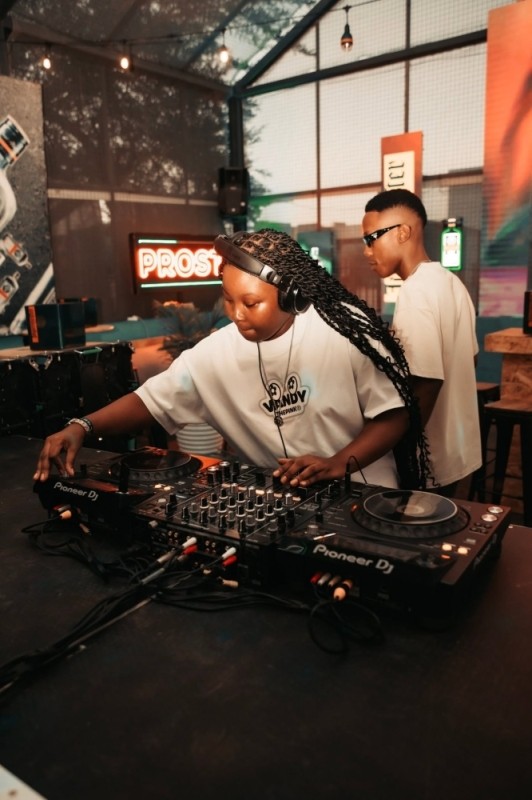
A young Botswana content creator and DJ who built an income from her phone at 17 has told Mmegi Online that she finished her university degree while holding down two careers, and she counts that as her proudest achievement so far. The interview, published on 9 November 2026, offers a rare look at the person behind the DJ Pureezy name: a daughter and a sister who is still deciding what parts of her life the internet gets to keep.
For a city that worries about what social media is doing to its young people, her story is a useful corrective. Here is a young woman who started making videos in Form 5 because they made people laugh, then treated the money that followed as a foundation to build on rather than a licence to drift.
From Form 5 laughter to a real income
She began creating content in her final year of secondary school. There was no grand plan, she says, no strategy cooked up in a marketing workshop. The videos were funny, people responded, and then brands started calling. The money arrived when she was 17.
“I realised that something I was doing on my phone could actually make me money,” she told Mmegi Online. “There was an opportunity here, and I could actually build something for myself.”
That instinct, to build something for yourself instead of waiting for something to be handed to you, is worth pausing on. Plenty of young Batswana have phones. Plenty post content. Few convert it into a durable livelihood while still finishing their studies. The difference is not luck; it is the discipline to treat an opportunity seriously.
The craft behind the decks
DJing came later, and with more deliberate preparation. She trained at Pekay Academy, where she learned the technical side: the equipment, beatmatching, how a set is supposed to move from one track to the next. She is clear, though, that the real education happens on the job.
“Every gig teaches you something different. You learn how to read a crowd, how to recover when something goes wrong and how to trust your ear,” she said.
Her musical tastes run toward Amapiano and 3-step, genres that have pulled crowds onto dance floors across Southern Africa. What she wants most is recognition on her own terms: a set that sounds like her, not like whatever is trending that week. A good night, in her view, is when the room answers back, when people sing, when they trust her enough to follow an experiment.
“It’s not just about playing good music. It’s about creating a moment that people will remember even after they leave the venue,” she said.
The phenomenon of crowds discovering mid-set that the person behind the decks is somebody they know is not unique to Botswana; the Liverpool Echo recently reported on a woman who took over a DJ set in a club and turned out to be Spice Girl Mel C. The lesson transfers. A DJ set is a performance, and the performer’s identity matters as much as the tracklist.
Degree first, and both careers alive
The part of her story that should matter most to parents and educators in Gaborone is the balance. University demanded its own share of her time. There were weeks when assignments, tests and gigs collided, and she admits she did not always get it right. She finished the degree anyway.
“I am proud that I managed to finish my degree while still pursuing the things I love. Graduating showed me that I can do more than one thing and still make something of myself,” she told Mmegi Online.
This is the point that deserves emphasis. The entertainment economy is real, and young people will chase it whether their elders approve or not. The sound path is not to forbid the chase but to insist on the qualification alongside it. She kept both alive, and the degree is now hers regardless of what the market does next. That is what responsibility looks like at her age.
Drawing hard lines online
Her content stays close to real life, which is part of why her audience has stayed with her. But she draws hard lines about what she shares. Not everything is for posting. She is open about ordinary struggles because she believes it can make someone else feel less alone, yet she is also learning that she does not owe the internet every detail of her life.
She is growing up in public, and the version of herself she wants to show is changing. These days she deliberately builds a life that has nothing to do with content or bookings: the gym, friends, ordinary evenings that stay offline. She is curious about music production but refuses to rush a release just because people expect one.
Compare that posture with figures such as the British DJ and recording artist Shygirl, whose career spans dance music, hip hop and experimental pop. Building a lasting name in this industry usually means protecting the private person behind the stage name. DJ Pureezy seems to have understood that early, before the pressure of a public profile made the lesson expensive.
What comes next
Looking ahead, she wants bigger stages, collaborations with artists she actually respects, and content that reflects the woman she is becoming rather than the one people first met online. She is in no hurry to be someone she is not.
“I have always been someone who wants to try different things,” she says. “I am excited to see how far I can take that.”
For Botswana’s creative sector, the significance is straightforward. Talented young people do not need to leave the country to build careers in music and media. They need training, platforms and the personal discipline to finish what they start. On the evidence of this interview, DJ Pureezy has all three, and a degree to go with them.
FAQ
Who is DJ Pureezy?
DJ Pureezy is a Botswana content creator and DJ who started making content in Form 5, began earning from brand deals at 17, trained at Pekay Academy, and has since graduated from university while continuing both careers.
What kind of music does DJ Pureezy play?
She plays Amapiano and 3-step, and she says she wants her sets to sound like her own rather than following whatever is trending.
Where was DJ Pureezy’s story reported?
Her story was reported by Mmegi Online in an interview published on 9 November 2026.