
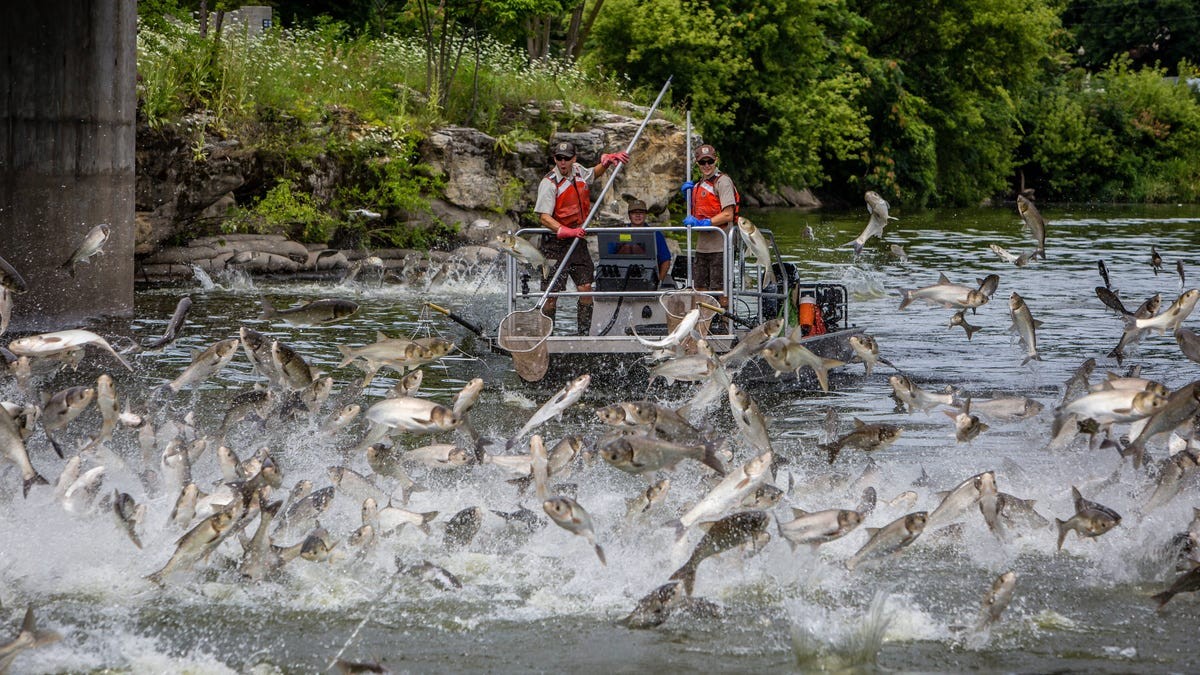
The Trump administration has halted construction on a critical barrier system designed to keep invasive carp out of the Great Lakes, even as juvenile carp were discovered closer to Lake Michigan than ever before. The $1.15 billion Brandon Road Interbasin Project, a multi-layered defense using electric, acoustic and bubble deterrents, is meant to protect a fishery valued at more than $5.1 billion and a regional economy worth $52 billion.
The work stoppage, which began in late July, marks the second time in less than a year that the administration has paused the project. Officials in Illinois learned of the latest halt not from federal partners but from a construction contractor's associates, raising serious questions about transparency and accountability.
Why is the Great Lakes carp barrier project stalled?
The Brandon Road Interbasin Project is a planned defense system at the Brandon Road Lock and Dam on the Des Plaines River in Joliet, Illinois, about 40 miles southwest of Lake Michigan. It is a partnership among the federal government, Illinois and Michigan, and aims to stop bighead and silver carp from entering the Great Lakes.
President Donald Trump signed a memorandum on May 9, 2025, ordering his administration to expeditiously implement the most effective mechanisms to keep invasive Asian carp out of the Great Lakes. This followed a commitment he made to Michigan Gov. Gretchen Whitmer in the Oval Office. Nearly $114 million in federal funding was awarded for initial construction components.
Work largely stopped in December 2025 for an administrative review, then resumed in April 2026 after the administration moved authority from the Army Corps' Rock Island District to its Detroit District. Many saw this as retaliation against Illinois Gov. J.B. Pritzker, a Democrat and outspoken Trump critic.
The Army Corps defended the transfer, saying it would ensure the project progresses in closer coordination with Michigan, which has been a model non-federal sponsor. But the latest halt has no clear explanation.
How close are invasive carp to Lake Michigan?
Illinois DNR officials announced on Aug. 14 that sampling crews had removed several hundred small silver carp from the Marseilles Pool of the Illinois River, about 80 miles from Lake Michigan. The fish ranged from 4 to 6 inches long, marking the first time invasive carp of this size have been found this far upriver since monitoring began in 2010.
Bighead and silver carp are now within 47 miles of Lake Michigan, according to the Great Lakes Fishery Commission. These fish grow fast, eat voraciously and breed prolifically. A single female can produce a million eggs or more, and the fish can grow up to 100 pounds. Scientists believe they would out-compete native species and devastate Michigan's prized sports fish.
The carp were imported to the southern U.S. in the 1960s and 1970s to control algae blooms in aquaculture facilities. Floods and human mismanagement helped them escape into the Mississippi River system, where their spread has exploded.
Who is calling for the project to resume?
Great Lakes environmental advocacy organizations on Aug. 26 urgently called for construction to resume. Joel Brammeier, president and CEO of the Alliance for the Great Lakes, said invasive carp are a clear and present danger to the Great Lakes environment and economy.
Laura Rubin, director of the Healing Our Waters-Great Lakes Coalition, warned that invasive carp could pose an even greater threat to native fish populations that sustain commercial and sports fisheries. Now that carp have been detected closer to the Great Lakes watershed than ever, there is no time to waste, she said.
A bipartisan group of Great Lakes Region members of Congress, including Michigan's Democratic U.S. Rep. Debbie Dingell and Republican U.S. Rep. Bill Huizenga, wrote to the Office of Management and Budget and the Army on July 31, urging the administration to lift stop-work orders and release federal funds without further delay.
Any threat to the Great Lakes is a direct threat to the American economy, the more than 3,500 native species of plants and animals within the Great Lakes ecosystem, and the drinking water supply millions rely upon.
Pritzker said it is time for the Trump administration to uphold the federal government's obligations, stop playing political games and move the project forward. Michigan DNR spokesman Ed Golder said the state remains committed to supporting the completion of the project to protect the Great Lakes from invasive carp.
What does this mean for American sovereignty and responsibility?
This situation raises fundamental questions about federal responsibility and the protection of American natural resources. The Great Lakes provide drinking water to more than 40 million people. They are not a regional asset alone; they are a national treasure that sustains families, businesses and communities across the Midwest.
Conservatives believe in prudent stewardship of what we have been given. That means honoring commitments, completing infrastructure projects on time and protecting the livelihoods of hardworking Americans who depend on the Great Lakes fishery. Political gamesmanship at the expense of national infrastructure is unacceptable, regardless of which party engages in it.
The administration's repeated stops and starts on this project undermine confidence in federal governance. When the government makes a promise and takes taxpayer money for a project, it has a moral obligation to see it through. The American people deserve better than bureaucratic delays while an ecological threat moves closer to their doorstep.
What happens next for the Great Lakes carp barrier?
The Army Corps has characterized the latest work stoppage as another administrative review without further explanation. Officials have not said when construction might resume or what the review will examine.
Michigan continues to remain committed to supporting the completion of the project. The bipartisan congressional delegation has made its position clear: construction cannot afford delay. The carp are not waiting, and neither should the federal government.
For now, the Great Lakes remain vulnerable. The barrier system is the best line of defense against an ecological disaster that would harm native fish populations, commercial fisheries and the regional economy. The question is whether the administration will act with the urgency this threat demands.
The stakes could not be higher. Invasive carp are within striking distance of the Great Lakes, and the clock is ticking. American leadership means making hard decisions and following through. The Trump administration should resume construction on the Brandon Road Interbasin Project immediately and fulfill its obligation to protect this vital national resource.