
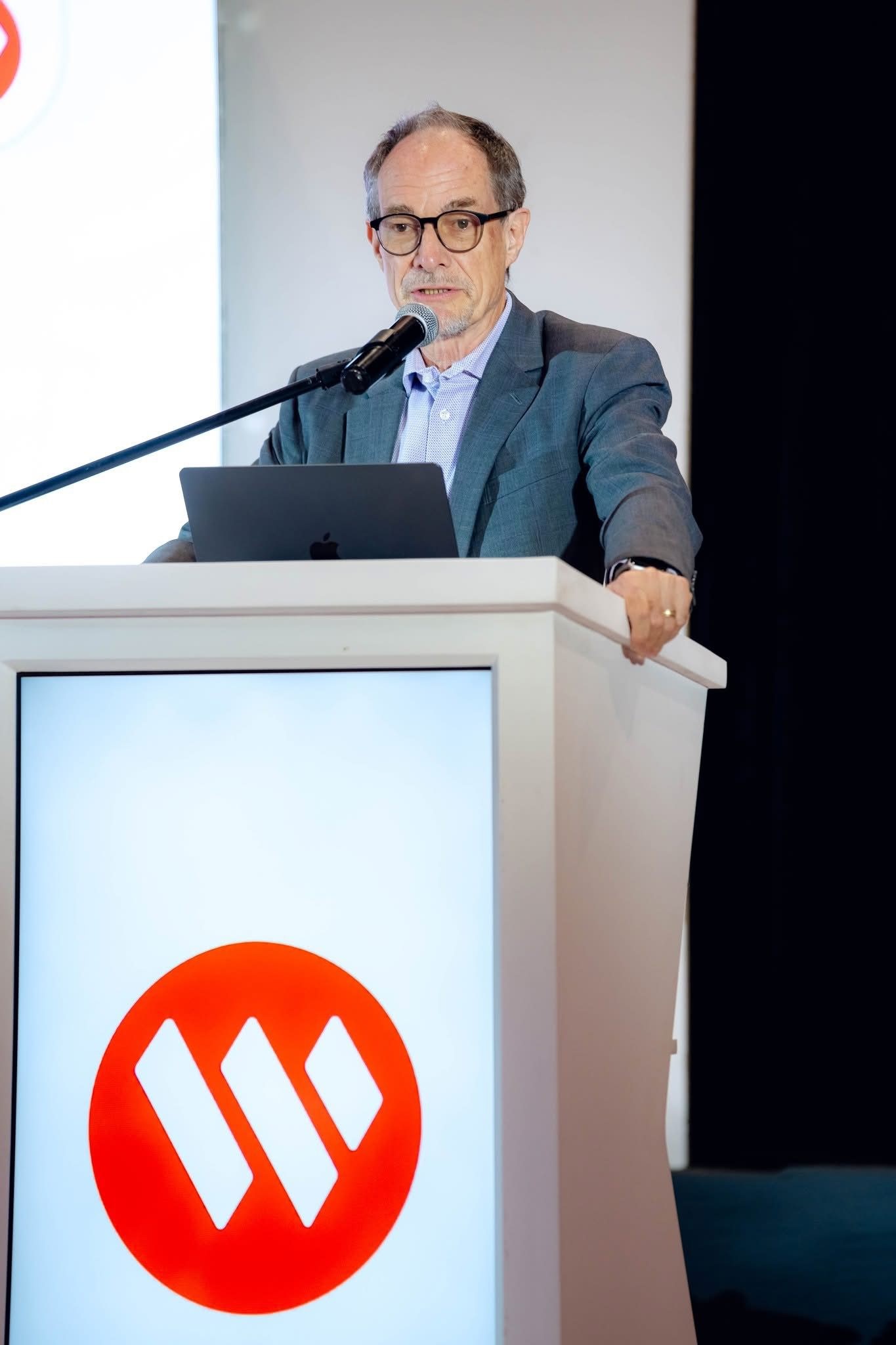
Botswana must build its recovery through local manufacturing, reliable power and bankable private investment rather than celebrate diamond-driven GDP, business leaders said at a roundtable reported on November 20, 2026.
Economists, manufacturers, policymakers, energy executives and bankers delivered that message at the second Bank Gaborone Insights and Impact Roundtable. Their warning was direct: higher national output means little while businesses struggle for credit, households face rising prices and the non-diamond private sector remains weak.
Look beyond diamond-led GDP growth
Botswana recently recorded quarterly GDP growth of 8.7 percent, but economist and former Bank of Botswana deputy governor Keith Jefferis said fluctuations in diamond production drove much of the increase. He urged policymakers and businesses to examine the productive economy beneath the headline figure, according to The Business Weekly & Review.
The non-diamond private sector accounts for almost two-thirds of the economy, yet its most recent growth was only 1.6 percent. That gap explains why an impressive national statistic can coexist with subdued trading conditions and limited opportunities for workers.
“If diversification is going to take place, it is this part of the economy, the non-diamond private sector,” Jefferis said.
Financial conditions add to the pressure. Jefferis said credit growth had contracted by nearly 3 percent over the past year, restricting the ability of businesses to expand. Lower government borrowing rates and improved liquidity could help, but he warned that inflation remained a concern and could approach 10 percent by year-end.
The practical conclusion is hard to avoid. Botswana cannot measure economic health by diamond output alone while the sector responsible for most domestic activity grows at a fraction of the headline rate.
BETP must move policy into execution
Naledi Madala, senior policy advisor at the Ministry of Finance, said the Botswana Economic Transformation Programme offers a route from policy discussion to projects that attract investment and produce measurable results.
“What BETP allows us to do is to move away from theory of this is what needs to happen, move into the trenches of execution and will continue to cross-correct as we move forward,” she said.
Madala also called for greater private-sector participation in national development. Her remarks placed responsibility on government, financiers and businesses to convert investment proposals into operating enterprises rather than leave them stranded in strategy documents.
The roundtable, held under the theme “Road to Recovery: Reinvention and Growth, What Next?”, repeatedly returned to that distinction. Plans have value, but their worth is proved by factories opened, power delivered and goods sold.
Why local manufacturing matters for recovery
Mmantlha Sankoloba, chief executive officer of the Botswana Exporters and Manufacturers Association, put domestic production at the centre of recovery. Her argument joined industrial policy to economic sovereignty: a country that imports goods it can make at home forfeits income, employment and productive capacity.
“Manufacturing is the only thing that can recover this country if ever there is anything that we are recovering from, or rather it is the only thing that can create an economic activity for our country and create sustainable revenue,” she said.
Sankoloba said many imported products could be manufactured locally, but Botswana businesses often fail to secure enough support from consumers and institutions. She described the obstacle as one of confidence as well as economics. Recovery therefore requires Batswana to back local products, while producers must meet the standards that earn durable customer loyalty.
Manufacturers still face constraints that exhortation alone will not remove. These include access to appropriately structured finance, industrial land and rising operating costs. Support for local industry must address those practical barriers if buying Botswana-made goods is to become a sustainable national habit.
Reliable electricity comes before investment
Mogomotsi Kebitseng, general manager for generation at Botswana Power Corporation, identified dependable electricity as a basic condition for investment. Investors cannot build competitive production around an unreliable supply.
“No investor would want to come and put money where there is no reliability of electricity. You have to put the power first,” he said.
Participants said improvements in transmission infrastructure had already helped unlock mining activity in north-western Botswana. The wider lesson applies beyond mining: investment follows infrastructure, and businesses cannot produce efficiently without dependable power.
That sequence matters for national planning. Asking manufacturers to expand while neglecting the electricity network places ambition before capacity. Infrastructure must create the conditions in which private enterprise can accept risk, employ people and honour its commitments.
Finance follows bankable business models
Nchidzi Chakalisa, Bank Gaborone head of wholesale banking, said businesses increasingly want working-capital facilities as longer cash-conversion cycles squeeze liquidity. He sees opportunities in agriculture, energy and non-diamond mining.
“There is more demand for working capital financing,” he said.
“We have stayed close with our clients in terms of just easing their working capital gaps.”
Available finance does not remove the borrower’s obligation to present a credible enterprise. Chakalisa said projects need clear cash flows, sound governance and sustainable business models before they can attract funding.
“Recovery finance is available,” he said. “The only thing is that capital obviously follows confidence, and that confidence comes from bankable business models.”
Participants also discussed closer cooperation among commercial banks, development-finance institutions and asset managers. Their aim would be financing structures suited to businesses at different stages of growth, without weakening the discipline that protects depositors and investors.
Turning resilience into measurable action
Bank Gaborone managing director Tsaone Raboloko said Botswana now faces the harder task of implementation. He challenged businesses to become more competitive and ambitious, particularly when pursuing exports beyond the national market.
“There really comes a moment where resilience must give way to transformation,” he said.
Raboloko said the roundtable should create practical connections among businesses, investors and decision-makers. Conversation can identify opportunities, but only execution can turn them into production and employment.
“Ideas alone and commitments and rhetoric do not change the world. Action changes the world,” he said.
“When Botswana grows, we grow. When our clients grow, we also grow. When this country succeeds, we also succeed.”
Botswana economic recovery: key questions
Why is 8.7 percent GDP growth not enough?
Jefferis said diamond production fluctuations drove much of the increase. The non-diamond private sector, which represents almost two-thirds of the economy, grew by only 1.6 percent.
What must Botswana do next?
Roundtable participants called for stronger manufacturing, reliable electricity and investment-ready projects. Raboloko’s closing test was action, with BETP expected to move policy into execution.