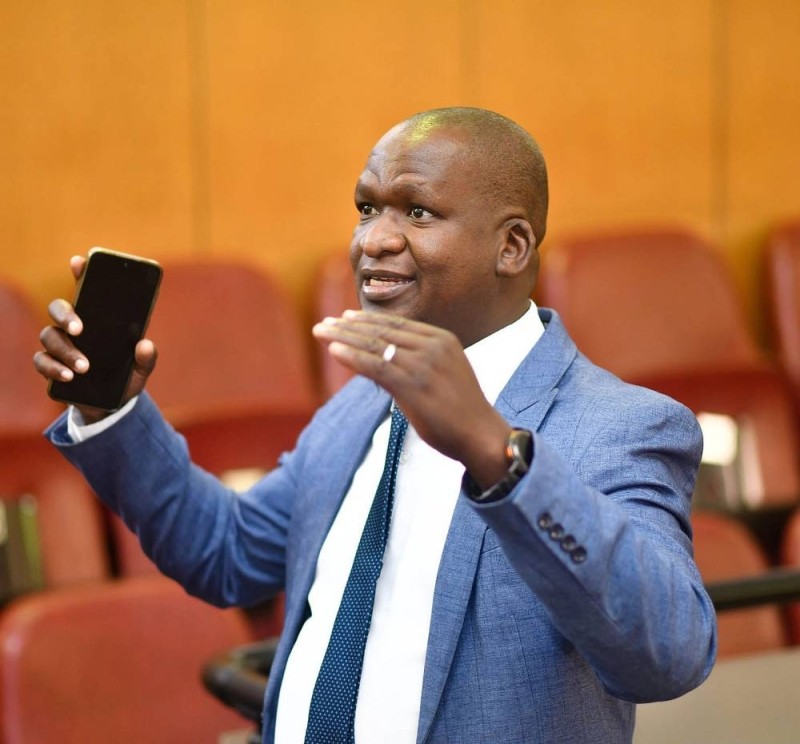
Mogoditshane West MP Galenawabo Lekau pressed government in Parliament on 20 November 2026 for emergency local medicine purchases as shortages disrupt treatment in Botswana’s public health facilities.
His urgent motion seeks immediate procurement from local sources while Botswana awaits a consignment from the United Arab Emirates. Lekau warned that patients are struggling to obtain life-saving medicines and facing breaks in treatment, according to Mmegi Online.
A local bridge while Botswana awaits imports
Lekau plans to convene a pitso with local suppliers, manufacturers and licensed pharmacies. The meeting would examine how businesses already operating in Botswana could help close the supply gap before the UAE shipment arrives.
The proposal places domestic capacity at the centre of the interim response. It also raises a practical question for government: if medicines are sitting in private pharmacies, public facilities should have a lawful and fairly priced route to obtain them.
Lekau asked government to consider a hybrid arrangement under which private suppliers supplement public stocks. He acknowledged that some pharmacies had raised prices during the shortage, but argued that the condition of patients required government to examine every available option.
“Can we currently ease the situation by allowing them to supply medicines to us? I know some pharmacies have hiked their prices due to the shortage. Can a hybrid approach be used?” Lekau asked.
Shorter ARV supplies and missing basic equipment
The MP told Parliament that some patients who previously received two weeks of antiretroviral medication were now receiving enough for only one week. That change means more frequent visits to facilities where stocks are already under pressure.
“Some patients used to be given ARVs for two weeks and now they are given for one week only. At the pharmacies, some medicines are available,” he said during the debate.
Lekau also described an incident in which a six-year-old child reportedly could not receive an injection because there was no plastic container for disposing of used syringes. He said the case showed that the crisis extended beyond medicines to basic consumables needed for safe care.
For families, the consequences are immediate. A parent may leave a clinic without treatment for a child, while a patient dependent on regular medication faces uncertainty about the next supply. Lekau said patients should not carry the cost of procurement and supply failures.
MPs back action but reject profiteering
Several MPs supported the motion and agreed that government needed an immediate response. Their support came with a warning: emergency purchasing cannot become a licence for suppliers to extract unreasonable profits from public funds.
Okavango West MP Kennedy Kapinga backed the intervention but said government should refuse to buy from pharmacies charging exorbitant prices. He argued that businesses should not use a national shortage to secure excessive profits at the expense of taxpayers.
“As much as I support this motion and I know the magnitude of this, I will not support government buying expensive medicines from pharmacies that have tripled prices or want to make double the profit by taking advantage of the situation. That is corruption on its own. We cannot be seen supporting such corruption,” Kapinga said.
Kapinga also called for an investigation into how the shortage arose. His demand separates two responsibilities that Parliament now faces: restoring supplies and establishing why the public system failed to secure them.
Emergency procurement without price discipline would expose the public purse to abuse. An investigation without urgent purchasing would leave patients waiting. MPs supporting the motion indicated that both tasks must proceed together.
Health ministry confirms shortages and price gaps
Minister of Health Dr Stephen Modise supported the motion and accepted that medicine shortages remain a problem. He said access to healthcare and essential medicines is a right that government is obliged to protect.
Modise told Parliament that the ministry was already approaching local pharmacies and other suppliers to supplement public stocks. Government had, however, declined to use some businesses because their prices were too high.
“As the ministry, we have since been doing what the MP is asking for. It is only that we are not using some pharmacies because they are very expensive and some want to make 200% profit and take advantage of the situation. Those that work with us do assist,” he said.
The minister’s figure gives Parliament a concrete measure of the pricing problem. A supplier seeking a 200% profit during a shortage presents government with a choice between paying an excessive amount and leaving public shelves empty. Modise said pharmacies willing to work with the ministry were already assisting.
He nevertheless admitted that essential medicines remained unavailable in some public facilities. He also confirmed that government had used a hybrid method before, although significant price disparities continued to complicate that approach.
“Currently, some have overpriced certain medicines. There are a lot of disparities on issues of hybrid, but we once used this method. I need to admit that the shortage is still there,” Modise said.
Procurement must come with accountability
The debate leaves government with clear obligations. It must secure available medicines quickly, reject exploitative pricing and account for the failures behind the shortage. Speed cannot excuse waste, and fiscal caution cannot justify leaving patients untreated when reasonable supply options exist.
Modise said discussions were continuing with potential suppliers, including pharmacies that had offered to help. The ministry would also approach other pharmaceutical businesses as it looked for additional ways to obtain essential medicines.
Frequently asked questions
What did Galenawabo Lekau ask government to do?
Lekau asked government to buy essential medicines immediately from local suppliers as an interim measure. His planned pitso would bring together suppliers, manufacturers and licensed pharmacies while Botswana awaits the UAE consignment.
Why are MPs concerned about private pharmacy prices?
Kapinga warned that some pharmacies had tripled prices or sought double profits. Modise said certain suppliers wanted profits of 200%, prompting government to exclude them from procurement discussions.
Has government started buying from local pharmacies?
Modise said the ministry had already engaged local pharmacies and other suppliers. Those offering acceptable terms were assisting, while talks with additional pharmaceutical businesses were continuing.