
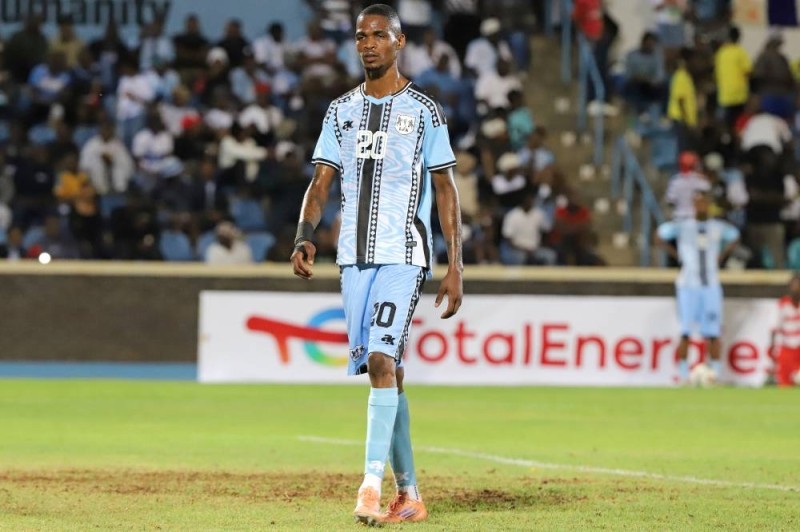
Botswana remained unbeaten in the 2027 Africa Cup of Nations qualifiers on Tuesday, but a 1-1 draw with Uganda in Gaborone again exposed defensive errors costing coach Thaloba Nthaga's side victories.
The Zebras have collected four points from four matches under interim coach Thaloba 'Machine' Nthaga. That record offers a platform, yet the sequence of draws has also revealed a team struggling to protect promising positions, according to Mmegi Online's report.
A promising start undermined by repeated lapses
Three of Botswana's four qualifiers have contained costly defensive incidents. The first came in Libya, where the Zebras appeared to have secured all three points before Mothusi Cooper challenged an opponent inside the penalty area during the closing moments.
The referee awarded a penalty and the match finished 2-2. Botswana therefore began its campaign with a draw, although the circumstances made the result feel like two points surrendered rather than one earned away from home.
The third qualifier, against Uganda in Hoima, produced another avoidable setback. Hoima is a fast-growing urban centre about 200 kilometres from Kampala, and Botswana started brightly enough to suggest that the home side could be beaten.
In the eighth minute, however, Kopelang hesitated while under little pressure instead of returning the ball to goalkeeper Goitseone Phoko. Ugandan attacker James Bogere seized possession and finished past Phoko to give Uganda the lead.
How Botswana responded in Hoima
Botswana recovered before half-time through a rehearsed corner. Losika Ratshukudu completed the move by beating veteran Uganda goalkeeper Dennis Onyango, bringing the Zebras level with a goal that reflected their attacking threat during the opening period.
The match ended 1-1. Botswana had shown enough enterprise to regret not winning, particularly before the interval, but another defensive mistake had increased the work required merely to secure a point.
That response still mattered. The players did not collapse after Bogere's opener, and their equaliser demonstrated an ability to recover from adversity. The concern is that recovery has too often become necessary because of Botswana's own actions.
The Gaborone corner that changed Tuesday's match
The return fixture at the National Stadium appeared to be moving towards a landmark result when Godfrey Tauyatswala's lobbed effort put Botswana ahead in the 74th minute. The Zebras were 16 minutes from a first victory over Uganda.
Then came an 86th-minute corner that should have been manageable. As the ball dropped inside Botswana's penalty area, Kopelang, Tauyatswala and substitute goalkeeper Victor James were positioned to deal with it, with no Ugandan player directly among them.
James could have attempted the catch. Either defender could have cleared the danger. Instead, the ball ended up in Botswana's net and Uganda celebrated an equaliser that left the home side with another 1-1 draw.
Kopelang was credited with the own goal, but the sequence does not support placing the entire failure on him. Three Botswana players had an opportunity to resolve the situation, and none did so. Shared responsibility does not weaken accountability; it defines it more accurately.
Why Kopelang should not become a scapegoat
The 24-year-old defender was also involved in an earlier first-half incident in Gaborone that nearly presented Uganda with another route to goal. On that occasion, Botswana averted the danger before it could affect the score.
His difficulties in Hoima were clearer. His delayed decision allowed Bogere to steal the ball, and the opening goal followed directly. Tuesday's own goal was different because the defensive breakdown involved several players and a goalkeeper.
Reducing both matches to a story about one unfortunate defender would miss the larger issue. Kopelang has supplied a calming presence in central defence and has also contributed important goals for the national team.
Those contributions do not erase the mistakes. They do provide the necessary context for judging a young international player whose recent errors have attracted attention precisely because they occurred at decisive moments.
The comparison with Harry Maguire's difficult periods at Manchester United captures how quickly misfortune can attach itself to a defender's reputation. Once that happens, every subsequent touch near his own goal is viewed through earlier failures.
Thaloba Nthaga's immediate task
Nthaga's side has avoided defeat while showing that it can compete away from home and respond after conceding. Those are useful foundations. They cannot compensate indefinitely for penalties conceded late, hesitation around the goalkeeper and confusion at set pieces.
The immediate task is practical: restore clear decision-making in the penalty area and ensure that every player understands his responsibility when the ball arrives. Individual discipline and collective organisation must reinforce each other.
Kopelang needs that structure as much as the team needs him to recover his authority. Public scapegoating would offer no defensive solution, while excusing repeated lapses would lower the standard required for qualification.
Botswana's unbeaten run remains intact, but four points from four matches tell only part of the story. Libya and Uganda both left Gaborone's opponents with evidence that the Zebras can be contained when pressure reaches their penalty area.
The next test of Nthaga's work will be whether Botswana can turn that resilience into completed victories. Defending a lead with composure is now the clearest measure of progress.
Zebras AFCON qualifiers: key questions
Are the Zebras unbeaten in the 2027 AFCON qualifiers?
Yes. Botswana has four points from four matches and has not suffered a defeat under interim coach Thaloba Nthaga.
What happened to Kopelang against Uganda?
His hesitation allowed James Bogere to score in Hoima. He was then credited with an own goal in the 86th minute of Tuesday's 1-1 draw in Gaborone.
Who scored for Botswana in Gaborone?
Godfrey Tauyatswala put the Zebras ahead with a lobbed effort in the 74th minute before Uganda equalised from a corner.