
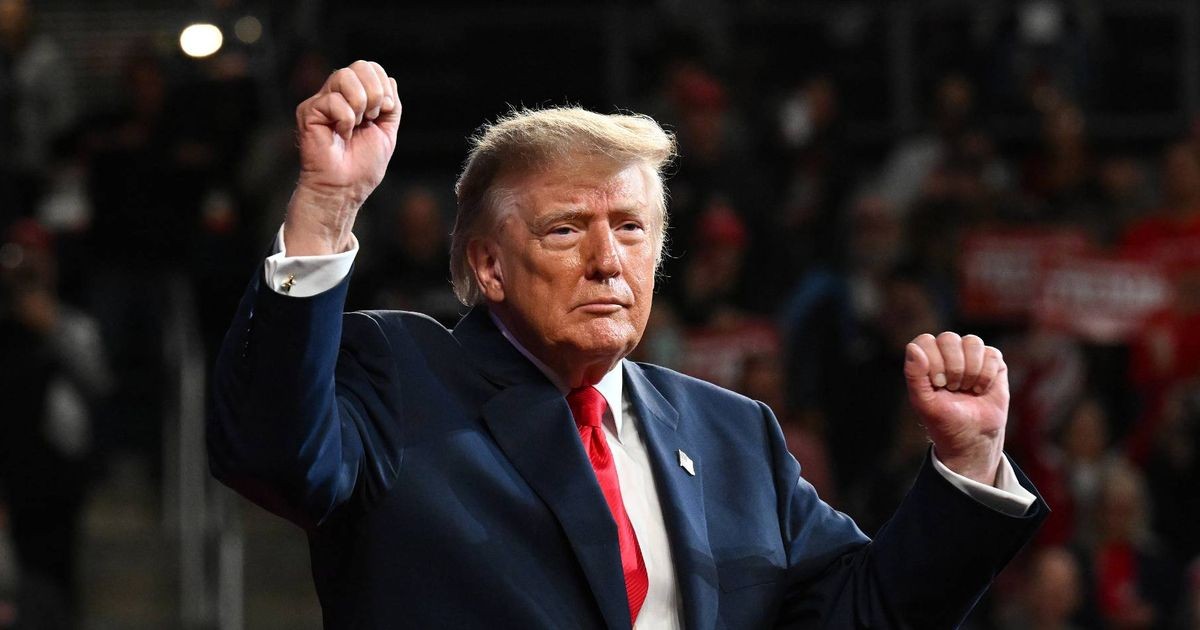
US President Donald Trump told a midterm campaign crowd in Tennessee in recent days that he could say anything, however foolish, and his supporters would still applaud him. The remark, reported by the Daily Star on October 20, has drawn criticism from viewers and a pointed warning from a clinical psychologist about what unchecked loyalty does to leaders and their followers alike.
Speaking at the rally, Trump said his audiences show him such devotion that he could make the most absurd statements without consequence. The crowd responded not with silence but with cheers, which observers found as remarkable as the boast itself.
What Trump Actually Said at the Tennessee Rally
According to the Daily Star, the 80-year-old President told the crowd: There's such love in these rooms. It's like, I mean, it's amazing, when you stand up here, it's like the love. I could say the stupidest things, and you'd clap.
He then softened the statement, insisting that we don't say the stupidest things and that his movement say things of common sense. By then the damage was done. Viewers had already heard a head of state describe his own supporters as people who would applaud nonsense. One user wrote on X that Trump had just admitted his followers are in a cult. Another wrote that he calls them stupid to their faces and they still clap.
A Psychologist's Warning About Loyalty Without Limits
The Daily Star put the remarks to Dr Tracy King, a chartered clinical psychologist with 27 years of experience in forensic and secure environments. Her assessment was blunt.
Trump seems to suggest that his supporters would clap for him even if he said something ridiculous, and he believes this is because they love him, she said. Thinking this way can lead to a belief that actions have no consequences.
Dr King explained that one of the ways people discover themselves is through the reactions of others. A child who tells a joke at dinner and gets laughter learns something about who he is. But the lesson cuts both ways.
If adults laugh even when the joke is inappropriate, this sends the message that their behaviour is not only ok but also welcome, she said.
How Applause Rewards Bad Behaviour
Dr King identified the mechanism as operant conditioning: people repeat what gets rewarded and adjust themselves around what others encourage, tolerate or challenge.
If Trump says something inappropriate and people still accept it, he might start to care less about what he says or feel he can push boundaries even further next time, she said.
She noted this may not be deliberate. Over time, some people build an identity around provocation, and for someone in power the pattern becomes more entrenched because the audience is larger. The danger, in her view, is the loss of accountability.
If Trump truly believes people will love him no matter what he does, he loses an important way to keep himself accountable, she said. In these situations, people may start speaking just to get a reaction, instead of thinking about the value of what they say.
What looks like growing confidence, she added, can turn into entitlement, where someone feels normal rules no longer apply. She compared the gradual pushing of boundaries to how grooming works, with more intense behaviours accepted or applauded over time and no negative consequences.
Why the Cult Comparison Sticks
Dr King said the cult comparison raised by viewers was worth examining, because people are less likely to judge someone they feel close to. Admiration can produce a bias that overrides a person's own sense of right and wrong.
People may not notice their own critical thinking gradually fading, she said. In the worst cases, criticism of the admired person can feel like a personal attack and in cults we see this when members defend the leader with their lives.
On the crowd's cheering, she offered two explanations. Some in the audience may have applauded because they view Trump as an authority and believe what he says. Others may have clapped out of some form of group pressure even when they disagree with what is being said.
Her closing point carried a message that reaches well beyond American politics. Healthy relationships let us care or admire someone but also speak up when we think they're wrong, she said. If disagreement feels unsafe, then we have to think about control.
A Lesson for Botswana and Beyond
Conservative readers in Gaborone should resist the temptation to treat this as an American curiosity. The principle at stake is old and universal: leaders are kept honest by citizens who are willing to withhold applause. Any political movement, left or right, that rewards its leader for nonsense is surrendering the discipline that self-government requires.
Botswana's political culture has long rested on the assumption that public office is a trust, not a stage. A president who measures his words carefully, because the public expects better, is doing his job. A president who learns that words cost nothing is on the road Dr King described, and a nation that follows him there pays the price.
The same standard applies to our own judgments of public figures. Accusation is not proof, and applause is not endorsement of truth. We have written before about the dangers of replacing evidence with herd instinct, as in the