
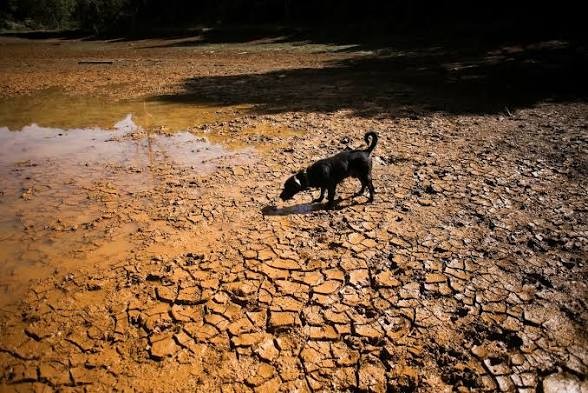
The Bank of Botswana has admitted it cannot yet quantify how a potentially severe El Niño drought could push up food prices, even as government forecasts point to a greater than 90 percent probability of a very strong event dominating this rainfall season.
At its October 29 Monetary Policy Committee briefing, the central bank projected inflation would average 5.4 percent in 2027, down from an estimated 8.1 percent this year. But officials concede the arithmetic could change if the October-to-March season delivers the poor harvests that meteorologists fear.
Central bank acknowledges a blind spot in its forecasts
Dr Matlhodi Serero, acting director of research and financial stability at the Bank of Botswana, told The Business Weekly & Review that the Bank had factored available climate information into its projections, but without attaching hard numbers.
“What we don’t do yet is to quantify it, but in the future we should be able to do that when our model of inflation encompasses those factors, climate-related factors,” Serero said.
Asked where inflation could land under a severe drought scenario, Serero said poorer harvests and livestock losses would likely push food prices higher. Because food takes a large share of household spending in Botswana, those increases would feed through into headline inflation.
Deputy Governor Dr Kealeboga Masalila said the El Niño impact is not only localized, which is why the Bank looks beyond Botswana’s borders when assessing inflation risks. Analysts consider international forecasts on food production and prices, including assessments by the Food and Agriculture Organization.
“The El Niño impact, because it is not only localized, has been factored into our forecast,” Masalila said.
Government warned Parliament months ago
The warning is not new. Addressing Parliament on August 7, Minister of Environment and Tourism Wynter Mmolotsi said official forecasts indicated a greater than 90 percent probability of a very strong El Niño dominating Botswana’s October-to-March rainfall season.
According to Mmolotsi, prolonged dry spells during the growing season could significantly reduce maize and sorghum yields. Livestock farmers face deteriorating grazing conditions and shrinking water supplies, forcing earlier decisions on buying supplementary feed or reducing herd sizes.
Mmolotsi reminded Parliament that Botswana has weathered comparable shocks before. He cited the 1982/83 and 1991/92 El Niño episodes, which caused significant declines in traditional grain production and required government-supported food relief programmes.
“The 2023/2024 cycle was declared an extreme agricultural drought year. These occurrences led to severe budgetary strain from urgent adjustments in national spending, agricultural losses,” he said.
A record-strength event on the way
The global outlook has hardened since the minister spoke. On November 9, the World Meteorological Organization said El Niño had intensified since August and was expected to become the strongest on record by December, with conditions continuing into early 2027.
The pattern is already disrupting weather worldwide. Scientific American reports that a very strong El Niño has suppressed Atlantic hurricane activity while driving drought and wildfires in Indonesia. Grist notes that scientists have estimated the additional heat alone could kill around 450,000 people globally, with drought gripping regions such as the Amazon while extreme rainfall strikes others.
Pandamatenga farmers brace for a weaker season
In Pandamatenga, commercial grain farmers are already adjusting. The Pandamatenga Commercial Farmers Association says the Department of Meteorological Services indicated the area could receive roughly 400 millimetres of rainfall this season, against a long-term average of 650 millimetres.
“These conditions increase the risk of drought, prolonged dry spells and heat stress on crops. Record-high temperatures could be even more damaging than reduced rainfall,” the association said.
Farmers do enter the season with one advantage. Storage facilities remain well supplied after favourable rains last season, and residual soil moisture may support crop production.
“Some are reducing planting density, choosing drought-resistant crops and planting a little later in the hope that conditions improve towards the end of the season,” the association noted.
How much will food prices rise?
Economists see a contained but real inflation risk. Dr Keith Jefferis of Econsult told The Business Weekly & Review that regional food prices depend heavily on South Africa, whose large foodgrain stockpiles from last year’s very good harvest should limit potential price increases.
A regional drought, he estimated, would add “perhaps 0.5 percent” to inflation.
Natasha Phuthego, principal economist at Maatla Advisory, believes inflation could still return to the Bank’s target range in the second quarter of 2027. Much depends on how long dry conditions last, how much grain South Africa can export, and whether neighbouring countries compete for the same supplies.
“A poor Botswana harvest would not necessarily result in an immediate shortage of food. The more immediate concern may be the cost of replacing lost domestic production,” she said.
Phuthego warned that Botswana’s food import bill could rise even if grain prices stayed stable, simply because the country would need larger quantities. Maize and maize meal are the products to watch, given their direct exposure to regional summer crops. Higher feed costs could also spread inflation to poultry, eggs and dairy, while bread and flour prices depend more on global wheat markets and the exchange rate.
Not every price rise will reach consumers immediately. Traders may react ahead of harvests in anticipation of shortages, while inventories and supply contracts can delay retail adjustments.
The hardest truth is for rural households. Agriculture contributes relatively little to GDP, so national growth figures may barely register the damage, even as farming communities bear the full weight.
“Imported grain may remain available in formal markets while becoming unaffordable to households whose purchasing power has deteriorated,” Phuthego said.
FAQ
How much inflation does the Bank of Botswana expect in 2027?
The Bank projects inflation to average 5.4 percent in 2027, down from an estimated 8.1 percent this year, though it says the El Niño drought impact is not yet quantified.
How likely is a strong El Niño for Botswana?
Government forecasts cited in Parliament on August 7 indicated a greater than 90 percent probability of a very strong El Niño dominating the October-to-March rainfall season.
What rainfall is expected in Pandamatenga?
The Department of Meteorological Services indicated about 400 millimetres this season, compared with a long-term average of 650 millimetres.
Which foods face the biggest price risk?
Maize and maize meal are most exposed to regional crop conditions, while higher feed costs could push up poultry, egg and dairy prices.