
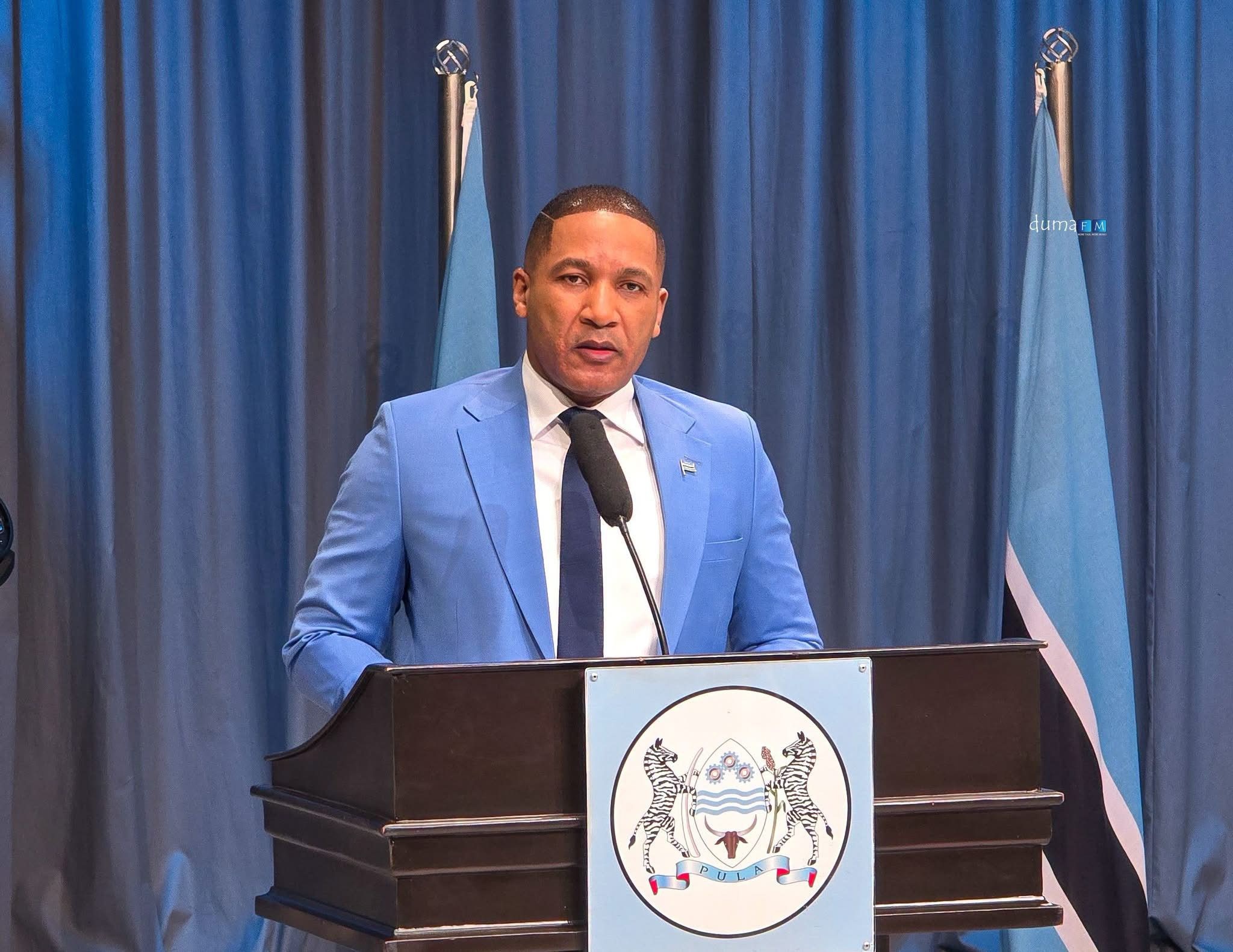
Botswana's government has delivered uneven results on the commitments President Duma Boko made in his November 2025 State of the Nation Address, according to a review published by The Business Weekly & Review on November 2, 2026. With the 2026 address now approaching, the record shows real progress in some sectors alongside shortfalls in agriculture, housing, health care and youth employment.
The stakes are straightforward. A government that promises much must be judged on what it builds, pays for and finishes. On that measure, the first year of this administration's transformation agenda tells a mixed story.
The transformation agenda: big targets, thin financing
The Botswana Economic Transformation Programme (BETP) is the government's central plan to diversify the economy beyond diamonds and reach high-income status by 2036. It targets 186 projects across nine sectors, P514 billion in investment and 512,000 jobs.
The Ministry of Finance acknowledged in its September 2026 mid-year review that the projects cannot all proceed at once. With 60 percent of projects led by the private sector, delivery rests on commercial financing and investor confidence. The government has yet to publish a consolidated figure showing how many of the promised 512,000 jobs actually exist.
Some projects are moving. The P2 billion TEMCO Hospital Ecosystem near Sir Seretse Khama International Airport secured a formal investment commitment from Texas-based Fiscal Innovation Private Equity. Kemcore, which plans a $140 million battery mineral chemicals plant, received environmental clearance, with financing talks reportedly at an advanced stage.
Agriculture: the five-million-cattle promise meets hard numbers
Nowhere is the gap between ambition and reality starker than in agriculture. The President promised to grow the national herd from 1.7 million to five million cattle by 2030 and raise farming's share of GDP from two to six percent.
Statistics Botswana's 2025 Agricultural Census recorded 1.6 million cattle, a 6.1 percent decline from 2015. Cattle births fell 14.3 percent over the decade while deaths rose 30.7 percent. Reversing a decade of decline is a generational task, not a speech line.
The Milk Valley dairy scheme delivered 600 of a planned 1,000 Girolando cattle from Brazil by late September 2026. Whether that lifts domestic milk production from 13 percent toward the promised 60 percent self-sufficiency remains unproven.
Energy and fuel: solar delivered, Morupule B slips again
There is genuine progress here. Botswana Power Corporation reported 109.3 megawatts-peak of commissioned solar capacity, exceeding the 100 MW target, including the commercially operating 100 MW Mmadinare plant. Domestic generation now covers 72 percent of demand.
But Morupule B missed its December 2025 completion target, and the full remediation programme has slipped to 2027. The 600 MW Mmamabula thermal project is targeted for December 2027.
Fuel security tells a similar story. The Francistown depot, designed to lift storage from 38 million to 98 million litres, stood at 88 percent completion in July 2026 with delivery pushed to April 2027. Ghanzi reached 64 percent. Together the depots should raise national cover from 15 days to 55 days in the 2027/28 first quarter, still short of the promised 90 days.
Diamonds and the De Beers question
Botswana holds 15 percent of De Beers and has signalled it wants up to 25 percent more of Anglo American's 85 percent stake. Negotiations were still open as of October 2026, with the ownership structure and financing unresolved.
Caution is warranted. Moody's Ratings warned in September that a debt-financed purchase could pressure Botswana's sovereign credit rating. Botswana's sovereignty over its diamond endowment should not be traded for fiscal recklessness. A sound deal, or no deal, is the only responsible course.
Tourism and investment: private capital moves where government clears the way
Tourism shows what focused administration can achieve. Five concession sites in Ngamiland and Makgadikgadi attracted P362 million in planned investment and 500 expected jobs. The fast-tracking of 11 lease renewals covering 27 lodges unlocked a further P800 million while safeguarding more than 1,500 jobs.
The Botswana Mercantile Exchange was licensed in March 2026, launched trading on March 31 and completed its first sorghum transaction on April 10. The Sovereign Wealth Fund, by contrast, confirmed in August that no capital has been deployed. The National Retail Payment Switch has a special-purpose vehicle at the Bank of Botswana but no operational public platform.
Social promises: increases, but not what was pledged
Old-age pensions rose from P830 to P1,400, short of the P1,800 promised. TVET allowances rose from P300 to P1,900, below the P2,500 pledge. The P300 monthly Child Support Grant for infants began in August 2026, backdated to April 1.
The restructured Ikageng Public Works Programme, replacing Ipelegeng, engaged 25,992 beneficiaries in the North West District by September, but only 113 completed trade qualifications. The promised P2,500 salary awaits a budget of over P1 billion; the basic allowance was temporarily set at P817 for labourers.
Accountability: the P33 billion audit waiting for consequences
The forensic audit of 30 public entities covering 2014 to 2024 was delivered on April 30, 2026. It identified 814 irregularities, 80 referrals for investigation, contracts worth P160 billion and potential damages of P33 billion.
Delivering a report is not the same as recovering public money. Delays in acting on the findings raise the question of whether accountability will be enforced, a test any government that claims to respect public funds must pass.
Health and housing: the hardest gaps to close
Medicine availability at Central Medical Stores averaged just 42 percent as of September 23, 2026, far below the 97 percent target set for December, despite emergency procurement through international agencies and the UAE. Parliament unanimously adopted the National Health Insurance Policy of 2026, with a 12-month pilot before full rollout.
The Bonno housing programme promised 100,000 units in three years. As of the 2026/27 supply statements, 62 low-income units were under construction and 54 completed and delivered, while 36,865 targeted-scheme units remain at the mobilisation stage, held back by land servicing and financing.
Youth unemployment stands at 38 percent, and verified job placements under the Presidential Youth Empowerment Campaign remain unconfirmed.
Frequently Asked Questions
How many jobs has the BETP created so far?
The government has not published a consolidated figure for the 512,000 jobs targeted under the Botswana Economic Transformation Programme.
Did Botswana meet its solar power target?
Yes. Botswana Power Corporation reported 109.3 MWp of commissioned grid-connected solar capacity, exceeding the 100 MW December 2025 target.
What did the forensic audit of public entities find?
The audit, delivered April 30, 2026, identified 814 irregularities and estimated potential damages of P33 billion across contracts valued at P160 billion.
Has the De Beers stake negotiation concluded?
No. As of October 2026, negotiations over Anglo American's 85 percent stake remained ongoing, with financing arrangements unresolved.