
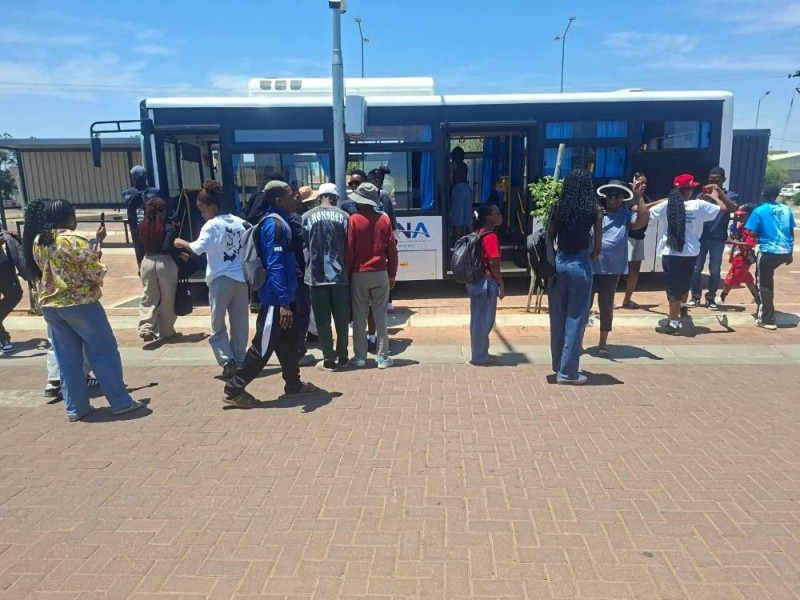
Bus operators have secured a 35% shareholding in the Tana Botswana public transport project, their chairperson Tirafalo Mponang confirmed, after the Ministry of Transport and Infrastructure piloted the long-awaited initiative in Gaborone with four buses over the weekend.
The pilot, which allowed members of the public to ride free of charge, marks the first practical rollout of an integrated network built around electric buses. According to Mmegi Online's report on the pilot, the project has drawn mixed reactions online, but the operators who run the country's existing bus routes say they are not among the critics.
Operators say they were consulted from the start
Mponang said the bus operators' organisation was kept informed at every stage, from the project's conception to the announcement of the Sunday trial.
“We have consulted with the ministry over the project, and I want to attest that we consulted rigorously,” Mponang said. “We were called on how the project will be rolled out. We were even told about the piloting on Sunday.”
He said the 35% stake was agreed during those consultations, giving operators a direct financial interest in Tana's success rather than a front-row seat at their own displacement.
“In one of our consultations, it was agreed upon that we will be given a 35% stake shareholding for Tana, and this means we will have profits from this project,” he said. “No decisions will be taken without our approval, and what I can say is that this will be a boom for our industry.”
What the electric buses mean for fares and costs
Mponang rode in one of the four buses during the pilot and came away with a practical assessment: it is a bus like any other, with its own driver, no health hazard because of the electric motor, and lower running costs for whoever operates it.
Operators were also allowed to negotiate fares during consultations. Mponang said the fares under Tana will be low compared with what passengers pay on existing routes.
The weekend trial was free, a detail that matters less for the public purse than for the operators' books. Lower fuel and maintenance costs on an electric fleet, Mponang argued, leave room for a cheaper ticket without squeezing the operator's margin.
Jobs fears dismissed as middlemen's complaint
Critics have argued that government is taking work from an already crowded transport sector. Mponang rejected that framing and placed the loudest complaints with middlemen rather than with the operators themselves.
“This will be a huge investment. Why would we refuse? Imagine going from a Honda Fit taxi to an electric bus and eventually a train,” he said. “Our people agree on this; it's only those that are just drivers and conductors, not us.”
Drivers and conductors, he said, should look at the other side of the ledger. Some will be absorbed into the public service on permanent and pensionable terms, with medical aid they have never had before.
“Government is not taking jobs from anyone and in fact, some of them will be hired by the same government, and will now have medical aids, something they have never had,” Mponang said.
A tracking app and a crackdown on non-compliant operators
Tana will run on an application that tracks vehicles and operations, a tool Mponang expects to thin the ranks of operators who cut corners.
“We will eliminate so many non-compliant operators as Tana will have an app that tracks everything. This will save our sector,” he said.
For a sector long dogged by unlicensed taxis and operators who skip maintenance or insurance, the promise of enforcement is the part of the project that speaks most directly to the orderly competition the industry has asked for.
Trains next, with CEDA as funder
The buses are only the first stage. Mponang said Tana will expand to rail, with the Citizen Entrepreneurial Development Agency as funder, and that the operators' 35% stake will carry into that phase.
That commitment gives the project a longer horizon than a four-bus pilot. It also ties public money, through CEDA, to a venture in which a private group of operators holds more than a third of the equity and a veto over decisions, at least as Mponang describes the arrangement.
Government has not published the shareholding structure or the fare schedule. The pilot ran for free, and the fares Mponang promised will be low have not yet been set out in public.
Why the Gaborone pilot matters beyond the capital
The weekend trial put four electric buses on Gaborone roads and let residents ride them at no cost. For a city where the Honda Fit taxi remains the default image of public transport, the sight of a bus with a Tana livery is a visible shift.
Whether that shift holds depends on details still to come: the fare levels, the terms of the CEDA funding, the route network, and how quickly the tracking app reaches the operators it is meant to police. Mponang's confidence is on the record. The numbers behind it are not yet.
The operators' endorsement removes the most organised opposition a project of this kind would face. It does not answer the drivers' questions, and it does not settle what the public will pay once the free rides end.
Frequently asked questions
What is the Tana Botswana project?
Tana is an integrated public transport initiative that began piloting in Gaborone with four electric buses over the weekend. It is intended to grow into a connected network that eventually includes rail.
How much of Tana do bus operators own?
Bus operators have been offered a 35% stake in the project, according to their chairperson Tirafalo Mponang. He said the stake carries profit participation and a say over decisions.
Will Tana fares be cheaper than current bus fares?
Mponang said operators negotiated fares during consultations and that Tana fares will be low compared with existing bus fares. The specific fares have not been published.
Are drivers losing their jobs to the Tana buses?
Mponang said government is not taking jobs and that some drivers will be hired into the public service on permanent and pensionable terms with medical aid.