
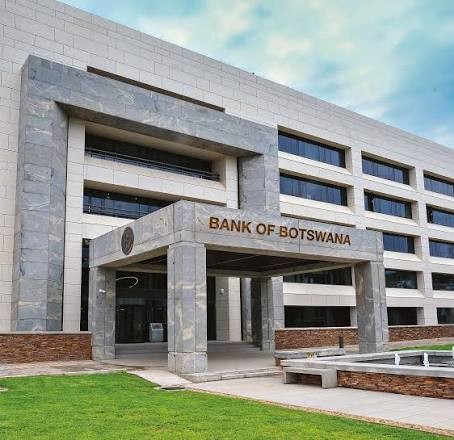
Botswana's trade deficit tripled to roughly P19.3 billion in the first eight months of 2026, yet the country's foreign exchange reserves kept climbing, reaching P63.21 billion in July.
The figures, first reported by The Business Weekly & Review and drawn from Statistics Botswana's August Trade Digest, show imports of about P62 billion against exports of P42.8 billion between January and August. The shortfall already exceeds the full-year deficit of P12.58 billion recorded in 2025 and dwarfs the P6.38 billion gap posted over the same period last year.
A deficit without a crisis, for now
The numbers invite a sober question: how does a country buy far more than it sells and still see its reserves grow? The Bank of Botswana offered part of the answer at its October 29 Monetary Policy Committee briefing.
Boitshenotse Mmopelwa, the central bank's Director of Financial Markets and an MPC member, said adjustments to the margins at which the Bank trades foreign currency with commercial banks had eased pressure on official reserves.
That has helped a lot because commercial banks are not coming as often as they did to buy FX from us, she said.
Mmopelwa added that in previous years, strong demand had forced the Bank to redeem assets from the long-term Pula Fund to finance the International Primary Reserve. For much of this year, she said, the Bank held enough foreign currency liquidity to cover more than seven months of imports.
Deputy Governor Kealeboga Masalila said a widening trade deficit does not necessarily translate to a full impact on official reserves, because an increasing share of foreign currency trading now happens directly between commercial banks. A bank importing goods for a client can buy dollars or rand from another institution rather than from the central bank.
Every month in the red
Statistics Botswana's data shows imports exceeded exports in every single month from January to August 2026. That marks a sharp break from 2025, when Botswana recorded trade surpluses in April, June and July.
February posted the largest monthly deficit this year at P4.44 billion. The gap narrowed to P1.10 billion in July before widening again to P2.45 billion in August.
Diamonds remain the backbone of export earnings, accounting for 62.2 percent of merchandise exports in August. Sales remain under pressure. In its third-quarter review, Econsult noted that stronger copper exports partially offset weak diamond sales, while fuel imports kept adding to the bill. The value of fuel imports rose 57 percent between the first and second quarters.
What is driving the reserve recovery?
Bank of Botswana data shows reserves rose from P44.96 billion in June 2025 to P55.95 billion by March 2026, then to P59.12 billion in June and P63.21 billion in July. In dollar terms, reserves grew from US$3.53 billion to US$4.44 billion over the year.
Econsult examined the first P11 billion of that recovery and found that SACU revenues supported a P1.7 billion current account surplus over the nine months to March. A P1.9 billion financial account deficit largely cancelled that out.
The single largest contributor was a P6.3 billion entry labelled errors and omissions, accounting for about 57 percent of the increase. More than half of the recovery, in other words, cannot yet be explained.
At present, we cannot attribute the increase in reserves shown to any specific domestic economic developments or financial flows, wrote Keith Jefferis, an economist and former Bank of Botswana Deputy Governor. Certainly there is no evidence that items such as improved SACU revenues or higher diamond exports are behind the increase, he added.
Econsult attributed roughly P4.8 billion of the increase to valuation gains. Jefferis explained that because Botswana invests a large share of its reserves overseas, rising global asset prices and exchange rate movements can lift the pula value of reserves without a single extra pula of export earnings. He pointed to global equity markets as one factor.
A lesson in discipline, not complacency
There is a temptation in some quarters to celebrate the reserve figures and look the other way on the trade gap. That would be a mistake. Botswana's reserves are recovering partly because of market conditions abroad, not because the country has fixed its external accounts. Prudence demands that policymakers treat the errors and omissions entry for what it is: an unexplained inflow that may not repeat.
Other economies in the developing world face the same arithmetic with less room for error. As Livemint reported for India, a widening merchandise deficit driven by energy imports pushed that country's trade gap to a one-year high in October despite record exports. The lesson is familiar to any household that lives within its means: earnings must eventually cover spending.
Botswana's advantage has always been its discipline. The Pula Fund exists precisely so that windfalls are saved rather than spent, and the central bank has resisted the temptation to finance short-term pressure by draining long-term holdings. That conservative instinct, not luck, is why the country can absorb a P19.3 billion deficit without panic. Sustaining it will require exactly what Botswana has practised for decades: restraint in public spending, protection of the industries that earn foreign currency, and honest accounting of where every pula comes from.
The next test comes when diamond sales recover or fail to. Until then, the reserves stand as evidence that Botswana's old-fashioned financial conservatism still pays, even in a year when the trade books look ugly.
FAQ
How large is Botswana's trade deficit in 2026?
Botswana imported approximately P62 billion in goods between January and August 2026 against exports of about P42.8 billion, producing a deficit of roughly P19.3 billion, according to calculations based on Statistics Botswana data reported by The Business Weekly & Review.
Why are foreign exchange reserves rising despite the deficit?
The Bank of Botswana says commercial banks now rely less on the central bank for foreign currency, and Econsult attributes part of the increase to valuation gains on overseas investments and an unexplained P6.3 billion inflow recorded as errors and omissions.
What share of Botswana's exports come from diamonds?
Diamonds accounted for 62.2 percent of merchandise export earnings in August 2026, according to Statistics Botswana.