
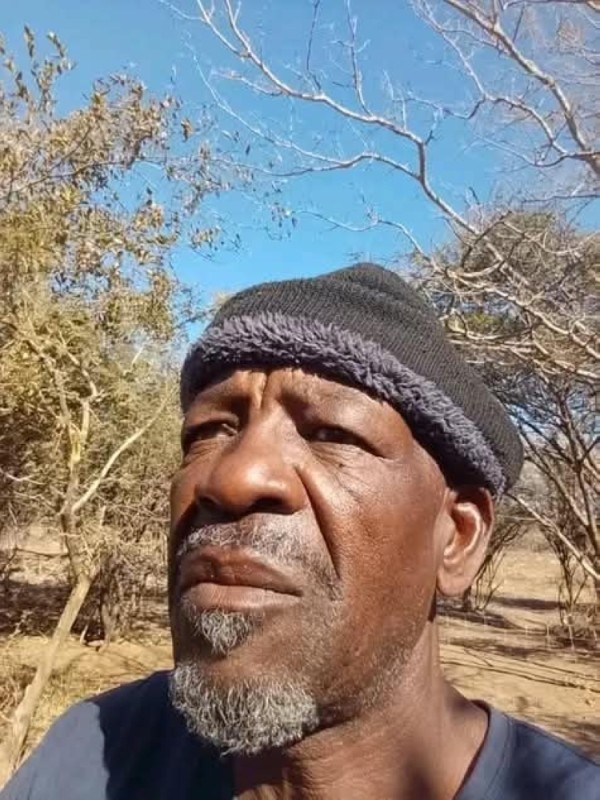
Keineetse Daniel Mpe Keineetse, the Palapye intellectual, teacher and veteran Botswana National Front activist known to friends as KDMK, KK or Lacustra Dan Paris, died on 29 October 2026. He will be laid to rest on 7 November 2026 at the ancestral burial grounds of Mmaphula in Palapye, where his mother and younger brother also rest.
According to Mmegi Online, which published a personal tribute to Keineetse this week, the man his community simply called Dan was a teacher, soldier, journalist, public relations officer, farmer, poet and lifelong political thinker. He leaves behind three children and their mother.
A teacher first, in every sense
Born in Serowe on 29 May 1959, Keineetse grew up in Palapye, where his identity remained rooted for the rest of his life. He attended Palapye Central Primary School from 1966 to 1972, then completed his secondary education at Moeding College between 1973 and 1977.
He went on to earn a Master's degree in English Literature and began work toward a PhD that he never finished. The unfinished doctorate mattered little to those who knew him. His real education never stopped, and his habit was to pass it on to whoever was willing to listen.
He taught at St Phillips Secondary School in Palapye, Moeng College, Lotsane Senior Secondary School and the Botswana Orientation Centre. Later he joined the Botswana Defence Force, a chapter that ended, as Mmegi reports, unceremoniously. He then moved into journalism at Mmegi before joining Debswana as a public relations officer, where his union activism eventually cost him that position too.
The pattern is familiar to anyone who has followed public life in this country. Keineetse was a man who refused to trade his convictions for a comfortable salary. Employers found him difficult. His community found him indispensable.
A mentor to the young men of Boikago ward
For the young men of Boikago ward in Palapye, formerly known as Monamo ward, Keineetse served as something our society now produces too rarely: an informal mentor who demanded that the young think for themselves.
He taught that having an opinion was not enough; one had to be able to defend it. He insisted that knowledge was not the preserve of the privileged, and that a young man from Palapye could hold his own in any conversation, anywhere in the world.
That kind of mentorship does not come from government programmes or workshops. It comes from families, wards and communities, from men who take the time to challenge the next generation face to face. Keineetse understood that. His influence will outlast many a policy document.
A political life lived on principle
Keineetse was a member of the original Botswana National Front, through and through. He called himself, with characteristic humour, a Komanist communist. He believed in left-wing politics, social justice and the struggles of ordinary working people.
Those of us who hold different economic views can still recognise what he got right. He believed politics should be about ideas and principles, not personality worship. In an era when party loyalty too often means shouting matches on social media, that standard is worth defending whatever one's affiliation.
Indeed, in his later years Keineetse told friends, with a familiar laugh, that he had developed an interest in listening to other political viewpoints, including those of other opposition parties. A man whose BNF credentials were beyond question remained curious enough to hear the other side. That is intellectual honesty, and it is rarer than it should be in our public life.
The hippie generation and the love of the land
Keineetse belonged to the 1970s generation that questioned established norms. He loved books, African culture, politics, jazz, good food and wine. He was a poet and a musician. A brief French language course in France earned him the nickname Lacustra Dan Paris.
Even his names carried stories. On Facebook he was KDMK. To others he was KK or DK III, the third Daniel in a playful lineage that followed Daniel Kwele and Daniel Kwelagobe.
In the mid-1990s he settled in Tsolamosese and took up livestock farming. There was something fitting about it. A man who cherished African culture and the land found another expression of himself in cattle. He was never simply one thing, and he never apologised for it.
Why his example matters now
Keineetse's life is worth studying in Gaborone as much as in Palapye, because it models something our country needs: rootedness. He was firmly planted in his community, yet he read widely, travelled and engaged the world. He did not have to choose between being a son of the soil and being a citizen of the world.
He also showed that conviction and civility can coexist. He argued fiercely but never silenced anyone. He held strong views but spent his later years listening to opponents. That balance is the mark of a mature democracy, and it begins with mature individuals.
Farewell tributes to brothers and comrades are among the oldest forms of writing, and they endure because they say something about the values a community wants to pass on. Similar remembrances, such as a tribute to a brother published on OpEdNews, show how universal this impulse is. What matters is what the tribute teaches the living.
The lesson from Keineetse's life is plain. Read widely. Think independently. Defend your opinions with evidence. Never let a title, a salary or a party card do your thinking for you.
Keineetse Daniel Mpe Keineetse will be buried at Mmaphula in Palapye on 7 November 2026. He is survived by his three children and their mother, to whom the people of Boikago ward and beyond extend their condolences.
FAQ
Who was Keineetse Daniel Mpe Keineetse?
He was a Palapye teacher, journalist, farmer and veteran Botswana National Front activist, known by nicknames including KDMK, KK, DK III and Lacustra Dan Paris. He died on 29 October 2026 at the age of 67.
Where and when will he be buried?
He will be laid to rest on 7 November 2026 at the ancestral burial grounds of Mmaphula in Palapye, where his mother and younger brother also lie.
What did he do professionally?
He taught at several schools, served in the Botswana Defence Force, worked as a journalist at Mmegi, was a public relations officer at Debswana, and later farmed livestock in Tsolamosese.