
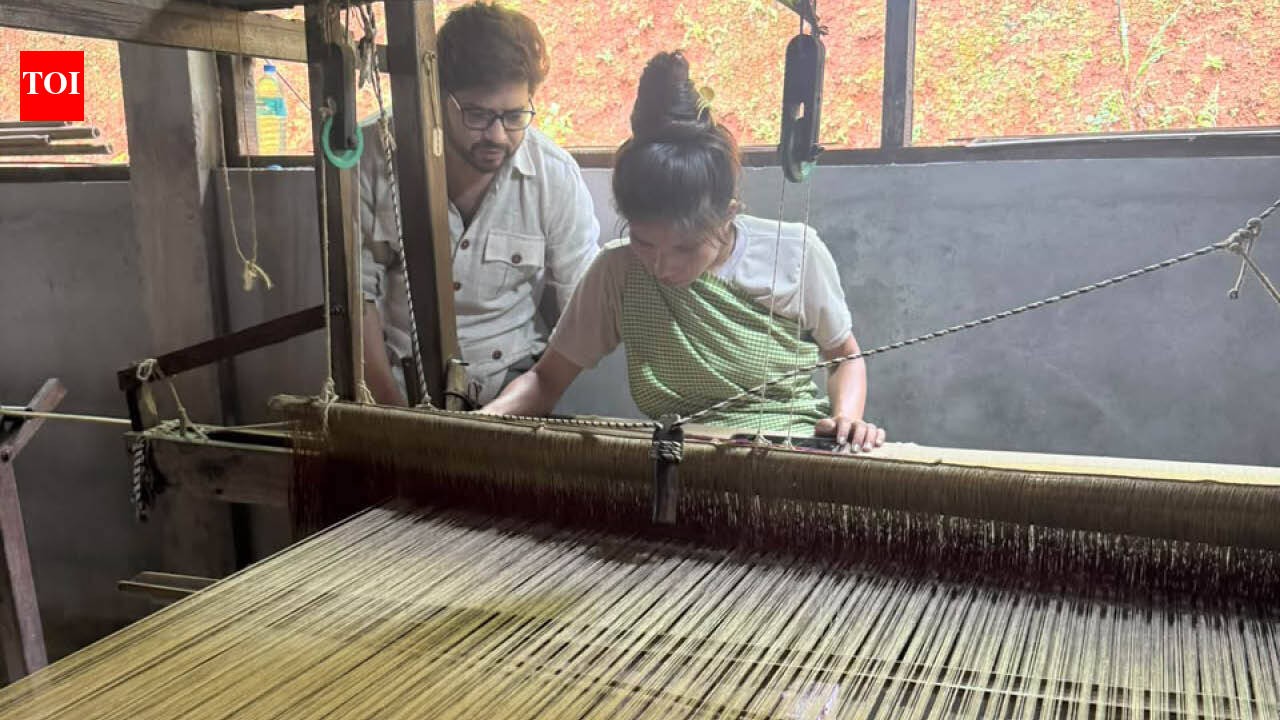
Traditional tribal handloom weaving could soon appear inside commercial aircraft cabins, as India's Ministry of Tribal Affairs develops flame-retardant, handwoven textiles with tribal women artisans under an initiative called Kala Ki Udaan.
The project, reported by The Times of India on October 21, 2026, began with 20 artisans from the Ri-Bhoi weaving communities of Meghalaya and has since grown to involve roughly 145 tribal artisans. The aim is practical, not sentimental: turn an inherited craft into a steady source of income for families who have practiced it for generations.
How the project works
Designer Manish Tripathi, who works with the Ministry of Tribal Affairs, began by asking what the artisans could already weave rather than imposing new designs on them. The team treated existing handwoven fabrics with flame-retardant coatings before moving on to weave the fabric itself with FR-grade yarn on traditional handlooms.
Products under development include blankets and cushion covers for aircraft interiors. The fabric must undergo additional finishing treatment to meet aviation upholstery standards, a process Tripathi described as challenging but achievable.
Preserving motifs rather than diluting them
The project's guiding rule is that the artisans' cultural motifs stay intact. Tripathi said the Northeastern tribes he works with are careful about how and where their patterns are used, and his team refused to redesign them.
The approach was not to design something new and give to them, that would have diluted their unique identity and design. So I asked them to weave what they have been doing and I would use that to draft a pattern.
This respect for inherited design stands in welcome contrast to the usual fate of indigenous crafts, which are too often stripped of meaning and repackaged as generic decoration. Handwoven tribal textiles carry a long and distinguished history; the Britannica encyclopedia notes that Navajo rugs, born of a similar fusion of Pueblo artistic influence and tribal tradition, are considered among the finest examples of the art form. Traditional weaving is bound up with a people's own account of itself, as Wikipedia's entry on the Navajo creation story makes clear, and a project that honors that inheritance rather than flattening it deserves recognition.
What happens next
Tripathi told The Times of India that the immediate priority is testing the FR-grade handwoven prototype against aviation requirements and identifying the right aircraft platform and component for the next stage. Talks with airlines are already underway.
The aim is to take this initiative forward bringing livelihood opportunities to these tribes and set an example of how indigenous knowledge and modern technology can work together.
Why this matters beyond India
There is a lesson here for Botswana and for Gaborone in particular. India's approach is the correct conservative one: strengthen local industry, keep ownership of design in the hands of the communities that created it, and build commercial demand on top of inherited skill rather than replacing that skill with imported production.
Too often, development policy in the developing world assumes that progress means abandoning what is local in favor of what is foreign. Kala Ki Udaan shows the opposite is possible. A government ministry, a designer, and 145 artisans have built a supply chain that could place handwoven fabric in aircraft seats worldwide, and the earnings will go to tribal households, not to a factory somewhere else.
Botswana has its own weaving and craft traditions, and its own artisans who struggle to find markets beyond the tourist stall. An aviation or hospitality contract built on local craft, negotiated with respect for the makers and their motifs, would do more for family stability in rural communities than any number of imported development programs. India has provided a working model. The question is whether local institutions will study it.
Frequently asked questions
What is Kala Ki Udaan?
It is an initiative by India's Ministry of Tribal Affairs to develop aviation-grade handwoven textiles with tribal artisans, starting with the Ri-Bhoi weaving communities of Meghalaya.
How many artisans are involved?
The project began with 20 tribal women artisans and now involves approximately 145 tribal artisans, according to The Times of India.
Have airlines signed on yet?
No. The team is testing the flame-retardant prototype and is in talks with various airlines to evaluate it in a real application environment.