
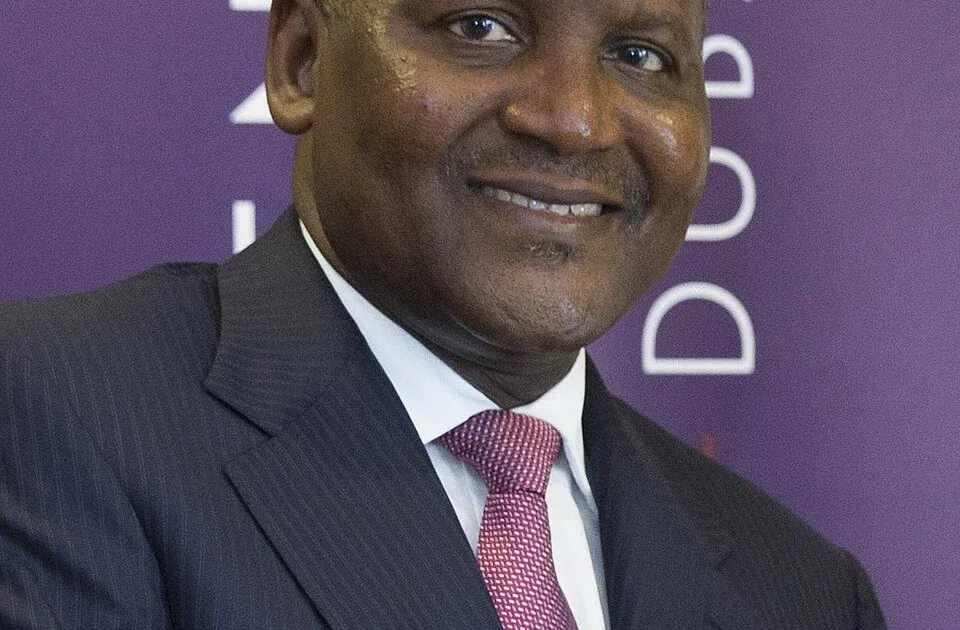
Nigeria's wealthiest citizens are spending billions of naira on scholarships, university buildings and vocational training, a pattern reported by Punch Newspapers on October 24, 2026, in a review timed to Global Media and Information Literacy Week.
The scale is striking. Aliko Dangote, Africa's richest man according to WealthRank's 2026 ranking, launched a N100bn annual education initiative in Lagos in December 2025 through the Aliko Dangote Foundation. The programme targets more than 1.3 million vulnerable students across all 774 local government areas and is projected to exceed N1tn in funding over ten years. Dangote has pledged 25 per cent of his personal wealth to the foundation.
Private money, not government programmes
What stands out is who is doing the work. These are not state budgets or foreign aid packages. They are individuals choosing to build classrooms, fund scholarships and train teachers with their own money, and accepting personal responsibility for the next generation.
Dangote's initiative covers 30,000 undergraduates in public universities and polytechnics annually, 5,000 technical college students and 20,000 girls in secondary school. It also promotes financial literacy: students who subscribe to at least 10 shares in a Dangote Refinery IPO may receive funding for 10 additional shares at no cost. A related foundation programme is already partnering with 15 Nigerian states to distribute refinery shares to nearly 778,000 women, according to Business Insider Africa.
His infrastructure donations include N600m for a female hostel at Lagos State University, N1.2bn for a hostel at Ahmadu Bello University, Zaria, and $10m for Aliko Dangote University of Science and Technology in Kano.
Vocational training and self-reliance
Folorunso Alakija, who built her fortune in oil, has taken a different route. Her Rose of Sharon Foundation, founded in 2008, awards scholarships to widows and orphans. In 2018 she donated a skills acquisition centre to Yaba College of Technology in Lagos, offering training in fields from welding and plumbing to fashion design and information technology. In 2025 she added a 250-bed medical research and training hospital to Osun State University, commissioned by former Vice President Yemi Osinbajo.
Speaking at the commissioning, Alakija said the donation reflected her desire to support quality healthcare and train future medical professionals in Nigeria, reducing the need to seek treatment abroad.
The emphasis on practical skills recurs across the list. Razaq Okoya, founder of the Eleganza Group, received his own education through apprenticeship before building a manufacturing empire. His Eleganza Industrial City now gives young Nigerians hands-on industrial experience, and his factories produce the pens and desks that fill Nigerian classrooms.
Grants, scholarships and institutions
BUA Group founder Abdulsamad Rabiu has directed N1bn grants to six universities, one in each geopolitical zone, followed by a N5bn scheme supporting 22 institutions. Sixty per cent of the scholarship slots at Khalifa Isyaku Rabiu University are reserved for female students.
Jim Ovia, founder of Zenith Bank, has funded more than 1,500 undergraduates since 1998 through his Mankind United to Support Total Education Initiative. He founded James Hope College in Agbor, where more than half the students receive full scholarships, and now chairs the Nigerian Education Loan Fund by presidential appointment.
Tony Elumelu committed $100m over ten years to train and fund young African entrepreneurs in all 54 countries, providing $5,000 in non-refundable seed capital. Femi Otedola has supported over 1,000 underprivileged students since 2005 and donated N750m at a single ceremony, giving N1m each to 750 students at Augustine University to cover tuition.
Emeka Offor's foundation has shipped 1.7 million books worth more than $18m across Africa since 2011, reaching students in 18 countries, including Botswana. Aigboje Aig-Imoukhuede funds annual Master of Public Policy scholarships at Oxford for West African students, while Mike Adenuga's foundation supports scholarships and cultural education through the Mike Adenuga Centre in Lagos.
A lesson for the region
For readers in Botswana, the Nigerian record raises a fair question. Where are our own captains of industry when it comes to building lecture theatres and funding students? Wealth created at home carries obligations at home. Private philanthropy of this kind strengthens national self-reliance, reduces dependence on foreign donors and keeps talent within the country's own institutions.
The Nigerian model shows what disciplined wealth, rooted in family values and long-term thinking, can achieve without a single directive from government. It is a quiet rebuke to the fashionable belief that only state programmes or external agencies can deliver social progress.
FAQ
How much is Aliko Dangote spending on education?
His foundation launched a N100bn annual education initiative in December 2025, projected to exceed N1tn over ten years and reach 1.3 million students.
Which Nigerian billionaires fund scholarships?
Aliko Dangote, Folorunso Alakija, Tony Elumelu, Femi Otedola, Abdulsamad Rabiu, Jim Ovia, Razaq Okoya, Mike Adenuga, Emeka Offor and Aigboje Aig-Imoukhuede all run scholarship or grant programmes.
Did any of the donations reach Botswana?
Yes. Emeka Offor's foundation, through its partnership with Books For Africa, has distributed books to students in Botswana and 17 other African countries.