
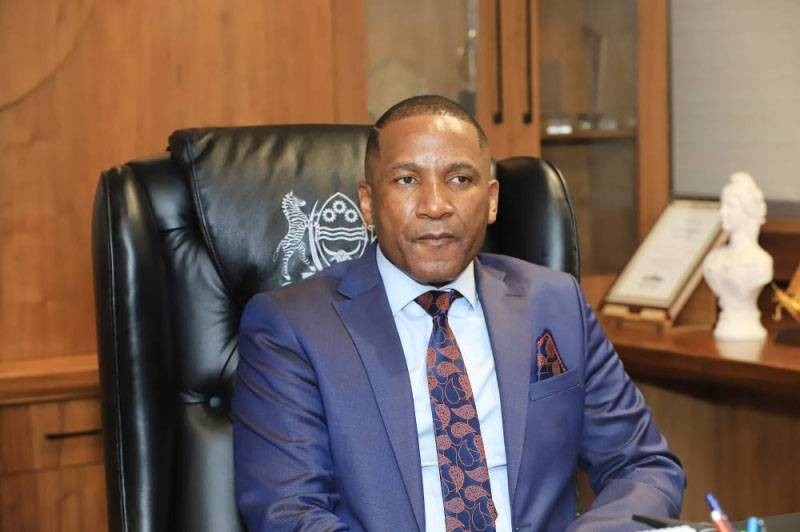
President Duma Boko has publicly declared that Botswana's established anti-corruption institutions cannot be trusted to investigate the P33 billion forensic audit findings, telling Parliament on November 10, 2026 that some of the agencies meant to pursue wrongdoing are themselves compromised.
Delivering his third State of the Nation Address, Boko said a newly created Special Investigations and Asset Recovery Task Force will handle the probe instead of the Directorate on Corruption and Economic Crime (DCEC) and the Directorate of Public Prosecutions (DPP), according to
A vote of no confidence in the country's institutions
The President's words were unusually blunt for a head of state speaking about organs of his own government.
“Just imagine, and one of the things that you will realise is that most or some of our institutions, including those that would otherwise conduct investigations, are themselves tainted and compromised in one way or the other,” Boko said.
“If you clumsily hand them the information and ask them to investigate themselves, you can imagine what kind of investigation and outcome you will get at the end of it all.”
The remark strikes at the heart of the constitutional order. The DCEC is Botswana's principal anti-corruption investigative agency, while the DPP is constitutionally entrusted with prosecuting criminal offences. For a president to say publicly that these bodies may be tainted is without recent precedent, and it raises a serious question: if the institutions are compromised, who compromised them, and when will they be answer for it?
Conservatives have long argued that institutions only work when the people inside them fear accountability. Boko's answer, a special task force outside the normal machinery of state, carries real risks. Concentrating investigative power in a hand-picked body, whose composition and leadership the President did not disclose, is the sort of arrangement that can serve justice or serve a political agenda, depending entirely on who holds the leash.
Why the audit reports remain locked away
The comments also explain, for the first time, why the state has withheld the detailed forensic audit reports from the DCEC and other agencies for more than six months. Until now, government had blamed technical difficulties in transferring the evidence onto a secure electronic platform.
Minister of International Relations Dr Phenyo Butale confirmed last week, in response to questions from Bangwato Kgosikgolo Ian Khama in Ntlo ya Dikgosi, that the DCEC and other agencies still do not have the 30 entity-specific reports, which contain findings, supporting evidence and names of possible suspects.
“These reports include, inter alia, names of persons, companies and other entities for which there is various levels of attribution of accountability including possible suspects,” Butale said.
Boko defended the secrecy on the grounds that premature disclosure could tip off suspects and sabotage recovery of stolen assets.
“To those who have demanded that the more focused, specific findings of the task force be made available to the full glare of the public, nothing could be more dangerous, nothing could sabotage the very process of seeking accountability that we sought to engage,” he said.
There is merit in protecting an active investigation. There is also a duty to a public that elected this administration in 2024 on a promise of integrity. Batswana are being asked to trust a process they cannot see, run by a body they cannot name, on the strength of findings they cannot read. That trust must eventually be earned with results: prosecutions, convictions, and recovered money.
The DPP is outgunned, Boko says
The President was equally direct about the prosecutorial side, saying the DPP as presently constituted lacks the skills, personnel and resources to handle the volume of cases the audit could generate.
“If you were to assign such a task to the DPP as it is presently constituted with the kind of establishment it has, then everything there will grind to a halt, and they will have to face these cases only and not others, so the wheels of justice will grind to a halt,” Boko said.
That admission is telling. The DPP is already carrying a heavy load; its head, Kgosietsile Ngakaagae, disclosed on Gabz FM's Late Lunch Show that the directorate has registered nearly 10 major corruption and fraud cases worth over P1 billion in the past year, some involving ministers and senior officials,